Published on Oct. 28, 2026
By: Elizabeth Trower
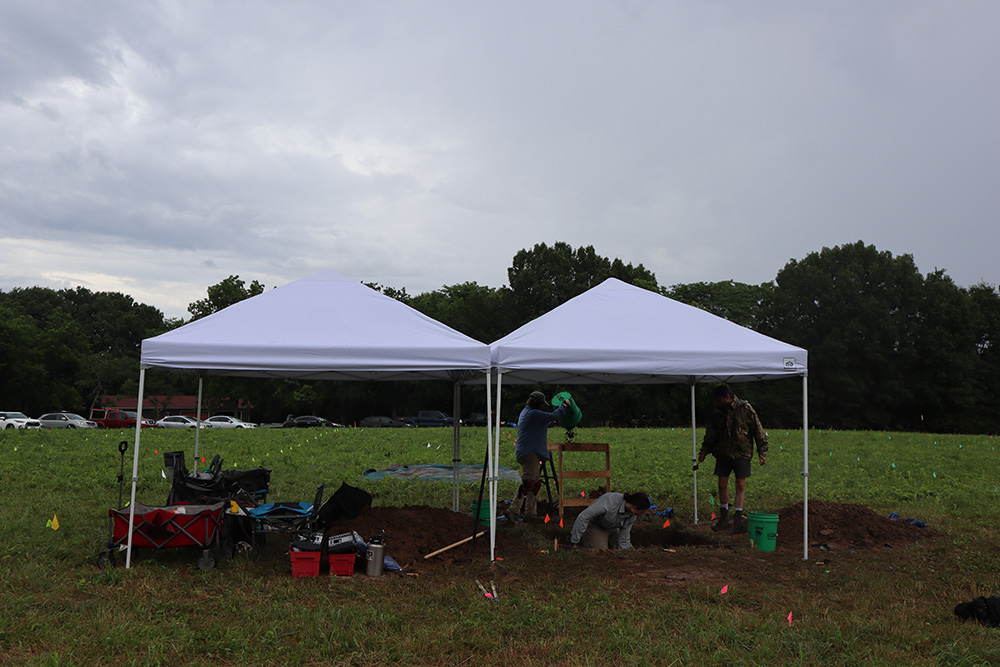
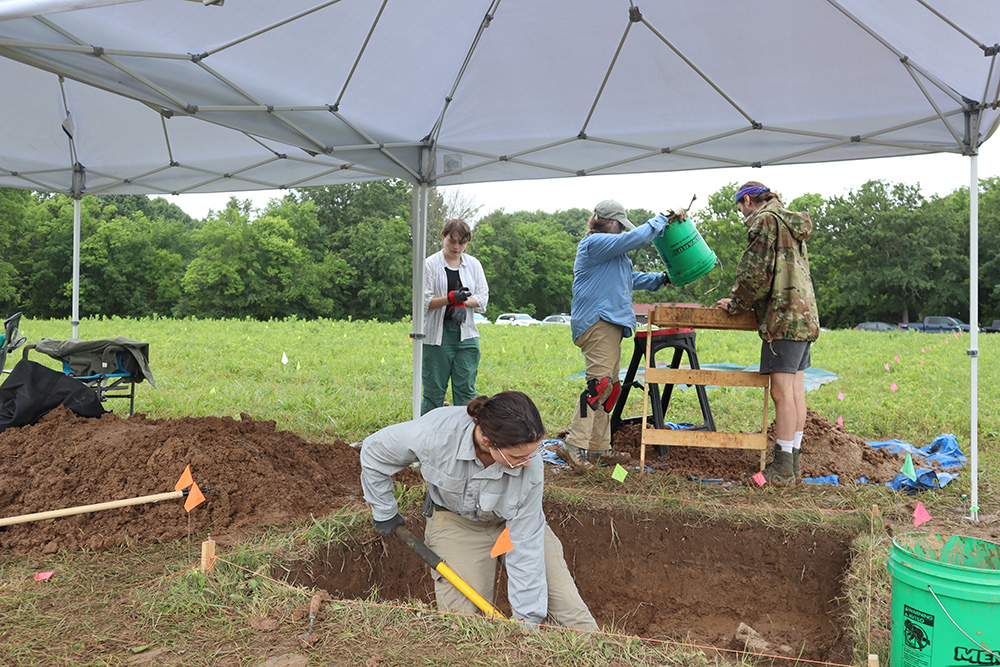
For four weeks this summer, University of Missouri students traded classrooms for the great outdoors, getting their hands dirty while uncovering thousands of years of Missouri history.
Led by professors, Todd and Christine VanPool, both professors in the anthropology department at Mizzou, 13 students traveled to Sedalia, Missouri, to conduct archaeological research and excavations at the Bothwell Lodge State Historic Site. Through a new archaeological field school hosted in partnership with Missouri State Parks, students learned the methods, technology and teamwork that professional archaeologists use every day. The experience was designed to provide high-quality, hands-on learning close to home and at a fraction of the cost of a typical field school.
“We wanted to create a low-cost, high-quality program for them,” Todd VanPool said.
While similar programs can cost around $5,000 in fees, Mizzou’s field school cost students $1,000, with the College of Arts and Science providing each undergraduate student with a $1,500 scholarship to help offset tuition costs.
But the value of the experience went far beyond the price tag.
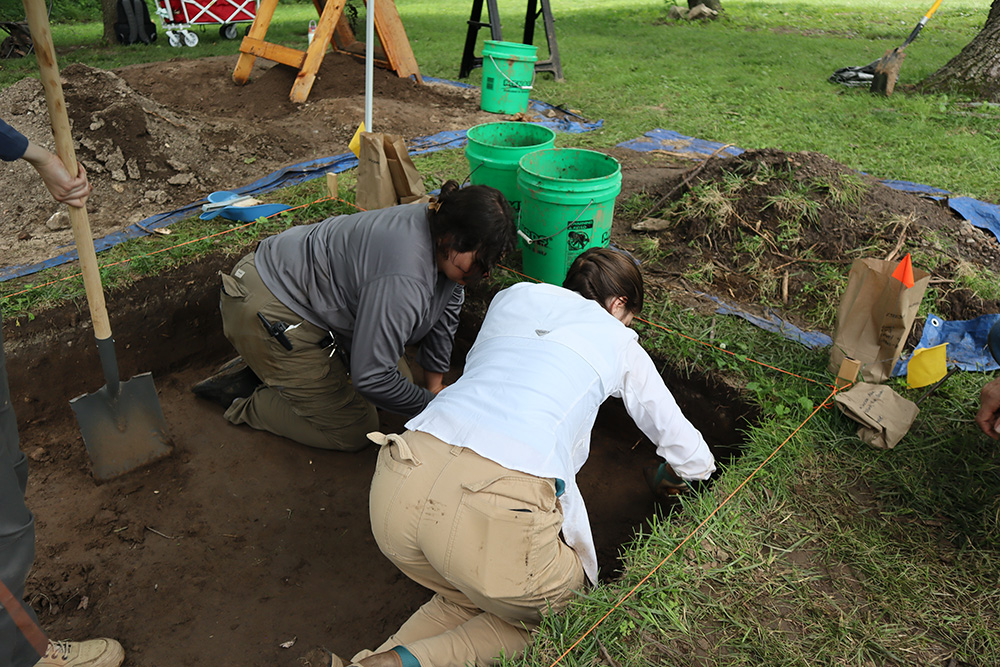
Students learned everything from shovel testing and excavation to GPS mapping, soil sampling and remote-sensing technologies such as ground-penetrating radar, electrical resistivity and LiDAR. These tools helped the team identify areas of archaeological interest before beginning excavation, giving students experience with both traditional and emerging approaches to archaeology and contributing to their career advancement.
“This is the prime example of Mizzou’s hands-on Missouri Method,” said Justin Bensley, MU PhD student and lead archaeologist for Missouri State Parks.
The field school also gave students the opportunity to work on a site that had remained largely unexplored. Researchers knew the area contained both historic and pre-contact occupations, but little was known about what was beneath the surface. Through their work, students uncovered evidence suggesting people lived at the site thousands of years ago, including projectile points, stone flakes and other artifacts.
For students, each discovery brought a new opportunity to learn.
“It’s been awesome. This site is so artifact dense, so, every day, it’s just something new,” Moe Warren, a Mizzou undergraduate student, said.
The experience also offered students a firsthand understanding of what archaeological work actually looks and feels like.
“I came into this kind of new to archaeology,” Chelsea Able, a graduate student, said. “This gave me a good overview of actually the practice of it, and how everything works when you’re actually out in the field.”
For another student, the field school was a chance to fill a gap in their academic experience and gain skills that can translate directly into a career. Students who complete an archaeological field school gain important preparation for professional archaeology, including experience that can contribute toward the qualifications expected for archaeological work.
“I did not get a field school experience when I was in my undergraduate or my graduate work,” Aaron Johnson, a nontraditional student said. “When this popped up, it was a very quick phone call. I’d love to join the team.”
And while the work was demanding — students camped near the site, worked long days and faced heat, rain and plenty of dirt — they said the challenges were part of what made the experience meaningful.
“Just be ready to get dirty,” Warren advised future participants. “It’s hard work, but it’s so fun, and it’s so rewarding every day.”
The field school was also about building community. Students from different academic backgrounds and class years worked side by side, sharing responsibilities and learning from one another.
“We’re sleeping in a campsite, 10 feet from each other in our tents for a month,” Warren said, highlighting the teamwork and relationships that developed along the way.
“The coolest part is that we have really great camaraderie,” senior Ryan Wentzel, said.
For one student, watching classmates experience discovery firsthand was a highlight of the program.
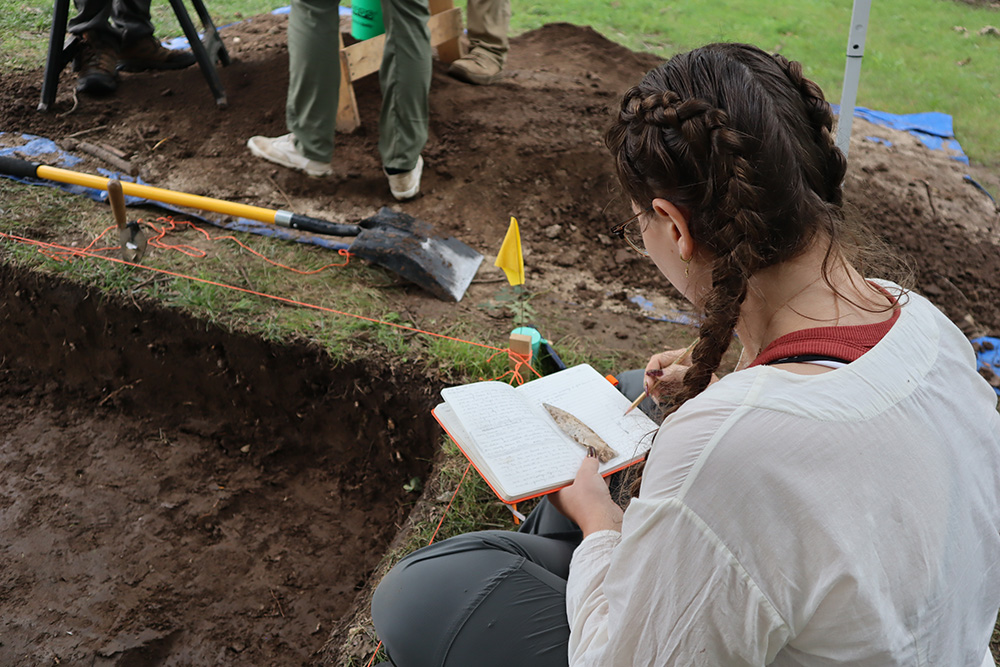
“The most rewarding part has been seeing the excitement on students’ faces, of getting to participate in the science, of getting to actually do it,” Johnson said. “Finding stuff is cool, but inspiring the next generation of future archaeologists is infinitely better.”
Through field school, students were practicing archaeology, solving problems in real time, collaborating with professionals and contributing to research that will continue beyond the summer.
“We are learning from the best in the business—Dr. Todd and Christine VanPool—and we are all coming together here to get the job done,” Wentzel said.
The partnership also creates benefits for Missouri State Parks. Students’ work helps the parks conduct archaeological research and compliance work while giving Mizzou students valuable experience working on sites in the region where many hope to build their careers.
The goal is for the field school to become an ongoing partnership between Mizzou and Missouri State Parks, creating opportunities for future students to learn through experience while helping preserve and understand Missouri’s archaeological heritage.
For the students who spent their summer digging into Missouri’s past, the experience offered a glimpse into their own futures, one shovel, artifact and discovery at a time.